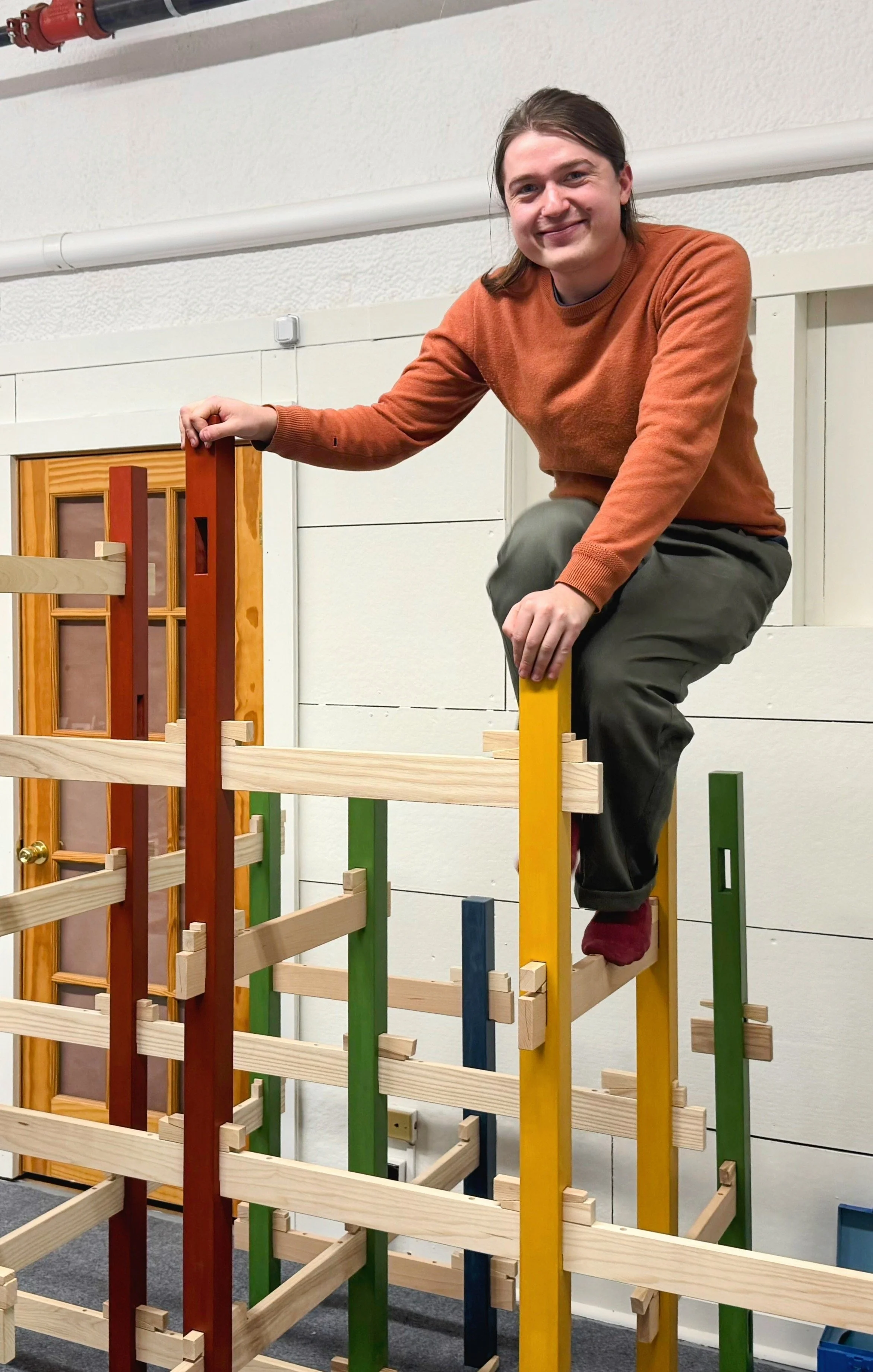
I am a Boston-based maker and teacher who makes functional objects from wood. I completed my undergraduate studies at Tufts University and the SMFA, where I studied the material culture of contemporary life and sculpture. In my senior thesis research, I examined how consumers and producers imbue wood with meaning, taking a critical lens to the fetish with traditional craft and natural materials. I now teach beginning woodworking at the Cambridge Center for Adult Education and the Eliot School of Fine & Applied Arts, introducing students to the properties of wood and the use and care of hand and power tools, and creating space for students to flex their design skills. In the studio, I focus on making furniture, maintaining tools, and making gifts. My practice unfolds through methodical processes of making, collecting, and reuse.
My practice asks how wood can support a movement towards a radical future rather than being complicit in the dystopic present. How might the objects I make exist outside market logic, encourage people to slow down and do less, and be used as a backdrop to elevate other people, objects, and mediums, giving value to the remnants we've deemed trash? How might woodcraft exist outside pay-to-make spaces and help people reimagine relationships to things and each other?
In response to a general dissatisfaction with the overconsumption of cheap, mass-produced objects lacking character and quality, some have turned to wood and traditional production methods as ways to live an ethical life: an antidote to capitalism, climate crisis, and material alienation. However, these wooden objects are only affordable to the rich, and these traditional production methods are only accessible to privileged practitioners like me, who frame themselves as artists. I believe that by balancing critical and hopeful lenses, I might find a way of making objects that can foster care and community rather than consumption and status.
I relate to wood by making functional things for people, making infrastructure for public spaces, maintaining/repurposing things made by other people, and teaching people to make things.
I design and make spaces and functional solutions through slow, detailed processes of recording, note-taking, and iteration, examining how to make lives better and easier through design, how to make objects better, and what “better” means. I strive to create objects that bring joy, whether through filling a specific purpose in my room, giving a gift to a loved one, or creating well-built furniture for strangers. Well-working, long-lasting objects enrich a person’s life. When I work with wood, the attention I give to the material transforms into care for others.
I explore how wooden objects can foster community and prioritize collective use over ownership, pushing woodcraft beyond the creation of commodities and toward fostering play and enabling others to create beyond their wildest dreams.
My work centers the afterlives of the objects I create, always considering how they might eventually be deconstructed and transformed for a new purpose, treating the material in a way that allows it to be easily transformed into something else. I love that wood can be endlessly reworked and remade. When I can, I create modular and adaptable work that might serve multiple purposes before being discarded. Along these lines, I deeply consider the materials I use, always opting for reuse and reworking of discards whenever possible—through dumpster diving, repairing old tools rather than buying new ones, using wood discarded on the street, or sourcing logs from local arborists and drying them myself. When I do buy new wood, I focus on regionally native species.
By partaking in the afterlives of objects (whether through maintenance, repair, or reuse) and providing care for the mundane and communal, I become a steward rather than an owner or author. Repairing tools, maintaining play structures, and extending the lifespan of everyday things all emanate from this aspect of my practice.
Through teaching, I hope to make woodworking more accessible—not just by making more woodworkers, but by helping more people build relationships of care and maintenance with the objects around them.